Security Programs
& Compliance.
Effective security programs are built on governance, accountability, measurable controls, resilience, oversight, and continuous improvement.
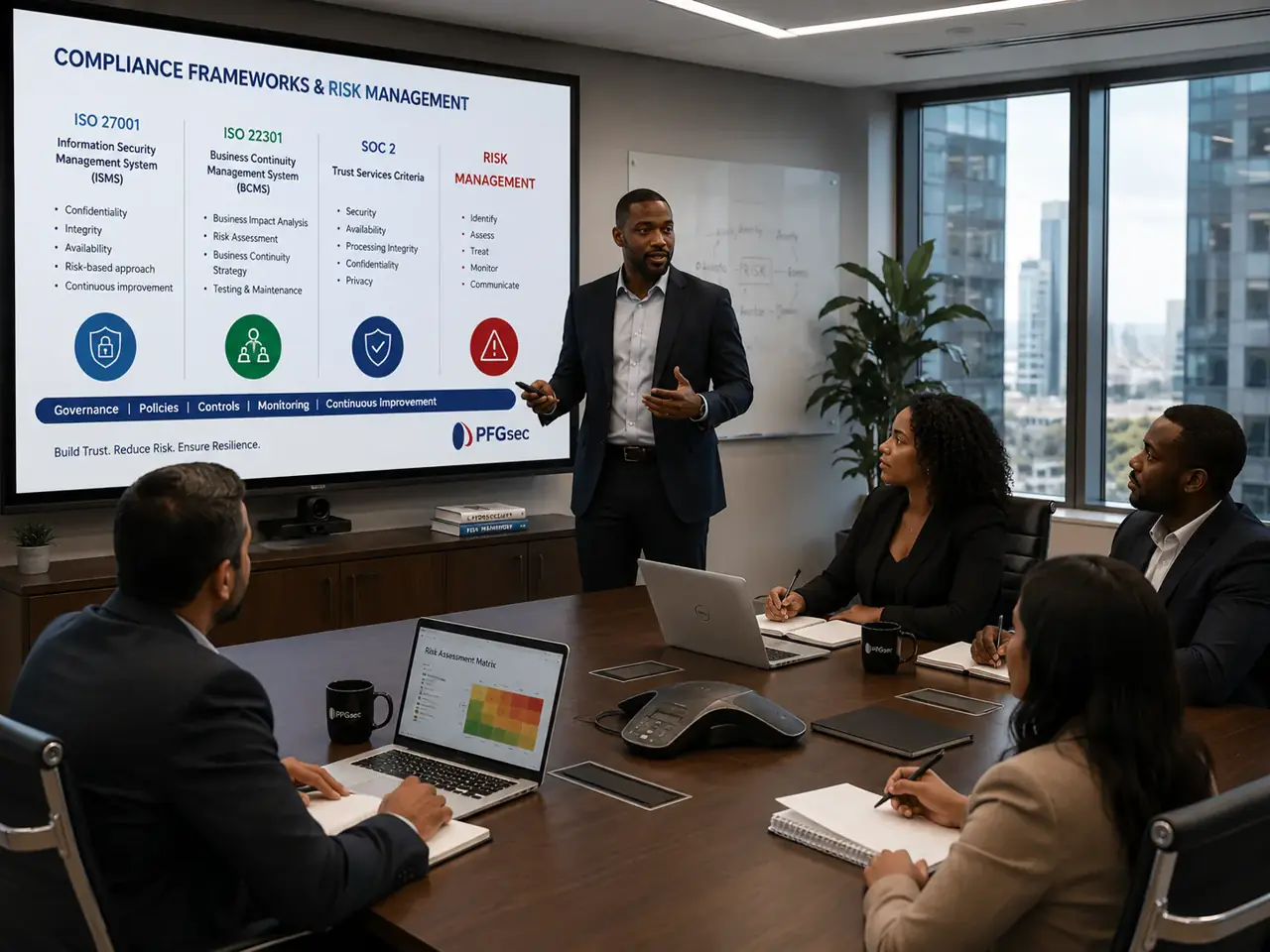
PFGsec helps growing SMEs and regulated enterprises design, assess, and strengthen cybersecurity programs that align with business objectives, regulatory expectations, AI governance needs, and recognized security frameworks. We support organizations with security governance, cyber risk management, ISO 27001, ISO 22301, SOC 2 readiness, control assessments, policy development, audit evidence readiness, AI governance alignment, and practical compliance implementation.
Cybersecurity Governance Program
Design practical cybersecurity governance structures that define ownership, accountability, reporting, decision-making, security oversight, and AI governance across the organization.
Risk Management & Risk Register
Establish practical cyber and AI risk management processes that help organizations identify, assess, prioritize, track, and report risks clearly.
ISO 27001 | ISO 22301 | SOC 2 Readiness
Support readiness and implementation activities for ISO 27001, ISO 22301, and SOC 2 by helping organizations establish practical controls, evidence, policies, resilience practices, and operating routines.
Control Assessment & Assurance
Assess the design and operating effectiveness of cybersecurity, IT, resilience, and AI-related controls to identify gaps, improve accountability, and support audit readiness.
Policy, Standards & Procedure Development
Develop and improve cybersecurity, resilience, AI governance, standards, procedures, and supporting documents that are practical, auditable, and aligned to business operations.
Audit & Evidence Readiness
Prepare organizations for audits, client assurance reviews, certification assessments, compliance requests, and AI governance reviews by organizing evidence, ownership, and remediation activities.
Preparing for ISO 27001, ISO 22301, or SOC 2
Organizations pursuing certification or client assurance need structured policies, controls, evidence, ownership, continuity practices, and readiness activities before formal assessment.
Client or Vendor Due Diligence
Customers, partners, or regulators may require proof that security controls, governance, risk management, business continuity, compliance processes, and AI governance practices are in place.
Weak or Informal Security Governance
The organization may have tools and technical activity but lack clear ownership, decision-making, reporting, accountability, policy governance, and operating cadence.
Control Gaps or Audit Findings
Internal audit, external audit, client reviews, security assessments, or certification readiness reviews may identify gaps that require structured remediation and evidence tracking.
Growing Regulatory or Framework Expectations
The organization may need to align with ISO 27001, ISO 22301, SOC 2, NIST, PCI DSS, privacy requirements, AI governance expectations, or internal security standards.
Cyber and AI Risk Visibility
Leadership may need a clear view of key cyber risks, AI-related risks, risk owners, treatment actions, and how security priorities connect to business impact.
Scaling from Startup to Enterprise
As organizations grow, informal practices become insufficient. Policies, governance, controls, evidence routines, AI oversight, and resilience practices must mature.
Preparing for Enterprise Customers
SMEs, SaaS companies, and service providers may need stronger security documentation, control maturity, AI governance evidence, continuity readiness, and assurance materials to win larger clients.
Discover
Understand the organization's business model, compliance drivers, AI adoption, resilience needs, security maturity, control environment, audit pressure, and stakeholder expectations.
Review
Review policies, controls, risk registers, AI usage practices, continuity documents, evidence, governance routines, audit findings, security documents, and existing framework alignment.
Assess
Identify governance gaps, control weaknesses, AI governance gaps, evidence gaps, policy deficiencies, risk management issues, continuity gaps, and audit-readiness concerns.
Recommend
Provide practical recommendations, implementation priorities, remediation actions, control improvements, AI governance improvements, evidence priorities, and a clear compliance roadmap.
Support
Support implementation, documentation, evidence collection, AI governance setup, reporting, remediation tracking, and leadership decision-making.
Proactive Outcomes
Stronger Governance
Define ownership, accountability, reporting, and decision-making structures that make cybersecurity, compliance, resilience, and AI governance easier to manage and measure.
Audit-Ready Evidence
Organize policies, controls, registers, screenshots, reports, continuity records, AI governance evidence, and process records so audits and client reviews become less reactive.
Reduced Compliance Friction
Clarify requirements, control expectations, remediation priorities, evidence needs, and AI governance obligations before audits, certifications, or customer assessments become urgent.
Practical Risk Visibility
Translate cybersecurity, compliance, resilience, and AI-related issues into risk statements, ownership, treatment plans, and executive-ready reporting.