Threat & Vulnerability
Management.
Effective vulnerability management goes beyond basic scanning. It requires real threat context, validation, and continuous remediation.
PFGsec helps SMEs and regulated enterprises neutralize security weaknesses before they turn into business-impacting incidents. Through automated pentesting, attack surface reviews, and AI-assisted risk models, we ensure your team always focuses on what matters most.
Vulnerability Assessment & Prioritization
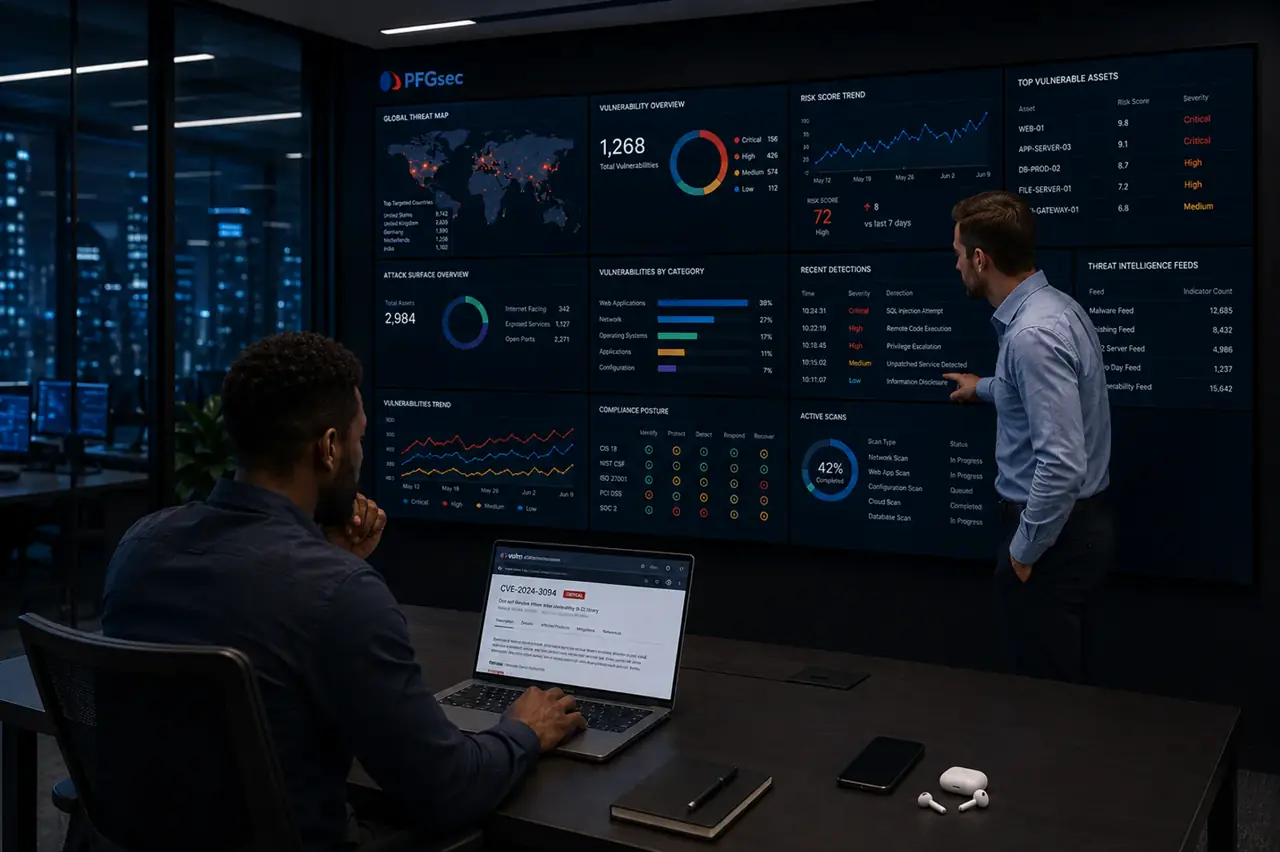
Identify, validate, and prioritize vulnerabilities across infrastructure, applications, endpoints, cloud, and platform environments using business context and threat relevance.
Automated Pentest & Attack Path Validation
Use automated security validation and controlled attack-path testing to identify exploitable weaknesses, misconfigurations, and practical paths an attacker could use.
External Attack Surface Management
Assess and reduce internet-facing exposure across domains, applications, cloud services, remote access points, certificates, misconfigurations, and exposed infrastructure.
Web Application & API Security Review
Assess web applications, APIs, authentication flows, data handling, business logic, and exposed services for vulnerabilities and control weaknesses.
Vulnerability Management Program Review
Assess and strengthen the operating model, tooling, ownership, remediation workflow, reporting, SLA management, and governance behind vulnerability management.
Threat Exposure & Remediation Advisory
Translate vulnerability findings, threat intelligence, exploit activity, and business context into practical remediation priorities and exposure-reduction actions.
Growing Vulnerability Backlog
Security teams may have thousands of findings but limited clarity on which vulnerabilities represent the highest business risk.
Internet-Facing Exposure
Organizations with public applications, remote access, cloud services, APIs, and exposed infrastructure need visibility into what attackers can reach.
Automated Pentest and Validation Needs
Traditional scanning may identify weaknesses, but organizations also need to understand exploitability, attack paths, and whether remediation actually works.
Cloud and Platform Expansion
Cloud, SaaS, containers, APIs, and hybrid platforms can introduce new misconfigurations, identity risks, and exposure paths.
Audit, Client, or Regulatory Pressure
Auditors, clients, regulators, and partners may require proof that vulnerabilities are identified, tracked, prioritized, remediated, and reported.
Remediation Ownership Gaps
Vulnerabilities often remain unresolved because ownership, SLAs, escalation paths, exception handling, and reporting are unclear.
Threat Activity and Exploit Trends
Active exploitation, ransomware campaigns, credential abuse, cloud compromise, and web attacks require threat-informed prioritization.
AI and Shadow AI Exposure
AI tools, AI-enabled SaaS platforms, and AI-integrated applications may introduce data leakage, access control, monitoring, and third-party dependency risks.
Discover
Understand the organization's assets, vulnerability tools, cloud footprint, applications, exposure points, AI adoption, remediation process, and risk priorities.
Review
Review vulnerability data, asset inventory, scan coverage, internet-facing exposure, application/API risks, cloud posture, remediation workflow, reporting, and evidence.
Validate
Validate high-risk findings, exploitability, exposure paths, business impact, false positives, remediation status, and control effectiveness.
Prioritize
Prioritize remediation using risk, exploitability, asset criticality, threat context, business impact, regulatory drivers, and operational capacity.
Support
Support remediation planning, reporting, stakeholder alignment, closure verification, exception handling, and program improvement.
Proactive Outcomes
Reduced Exposure
Identify and reduce exploitable weaknesses, exposed assets, risky configurations, and attack paths before they are abused.
Smarter Prioritization
Move from volume-based vulnerability lists to risk-based remediation that focuses effort on the vulnerabilities that matter most.
Stronger Remediation Discipline
Clarify ownership, SLAs, escalation paths, reporting cadence, exception handling, and closure evidence.
Threat-Informed Security Decisions
Use threat context, exploitability, business impact, and AI-related exposure insights to guide practical security decisions.