
Training for Staff
& Executives.
Cybersecurity training should move beyond awareness. It should build judgment, accountability, and practical security behavior across the organization.
PFGsec provides targeted cybersecurity, AI governance, and incident readiness training for SMEs and regulated enterprises. We equip staff and executives to mitigate human risk, eliminate unsafe behaviors, and build a security-aware culture that supports compliance and organizational resilience.
Executive Cyber Risk Training
Equip executives, board members, and senior leaders with practical cybersecurity, resilience, AI risk, and governance insight needed to make informed business decisions.
Staff Cybersecurity Awareness
Deliver practical cybersecurity awareness training that helps employees recognize threats, protect sensitive information, follow policy, and reduce everyday security risk.
Phishing and Social Engineering Training
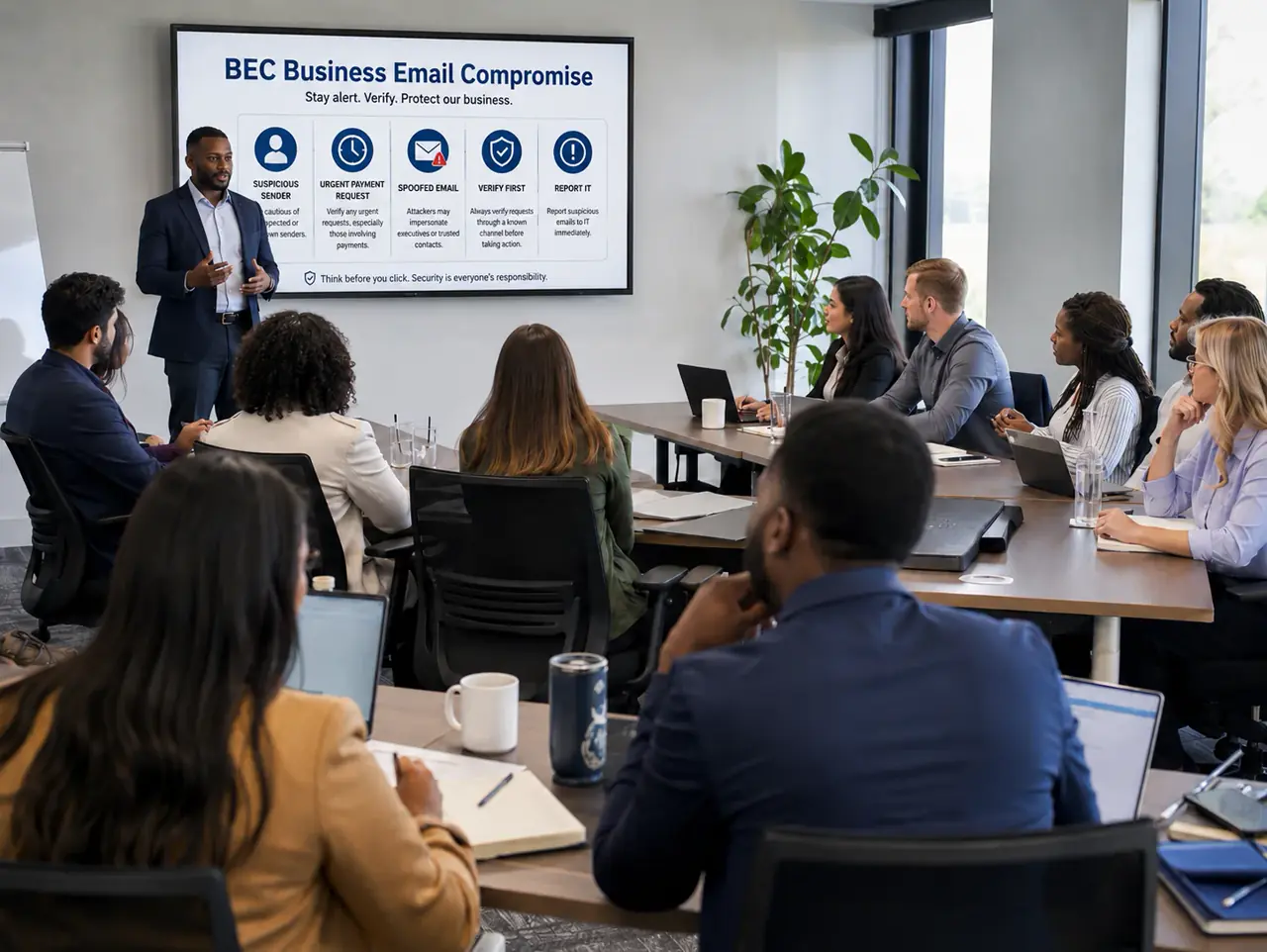
Help staff recognize, report, and respond to phishing, business email compromise, impersonation, credential theft, and social engineering attempts.
Risk, Controls and Compliance Awareness
Train business, IT, risk, audit, compliance, and security teams on cybersecurity governance, risk, controls, evidence, policy responsibilities, and compliance expectations.
Incident Response and Resilience Training
Prepare staff, executives, IT, security, communications, legal, and business teams to respond effectively during cyber incidents and operational disruption.
Human Risk Remains a Major Attack Vector
Employees are often targeted through phishing, credential theft, social engineering, unsafe data handling, and poor security behavior.
Executives Need Better Cyber Risk Visibility
Leadership teams need practical security understanding to make better decisions about investment, resilience, compliance, technology, AI governance, and incident response.
AI Adoption Is Outpacing Governance
Employees may be using AI tools without approved usage rules, data protection guidance, oversight, or monitoring.
Compliance and Audit Expectations Are Increasing
Frameworks, clients, regulators, and auditors increasingly expect evidence of security awareness, role-based training, control ownership, and governance accountability.
Phishing and Fraud Are Becoming More Convincing
AI-generated phishing, business email compromise, deepfakes, synthetic voice fraud, and impersonation tactics are making social engineering harder to detect.
Staff Need Role-Specific Guidance
Generic annual awareness training is often not enough. Executives, finance, HR, IT, security, developers, and control owners face different risks.
Incident Readiness Requires Practice
Organizations need staff and leadership to understand reporting, escalation, decision-making, communication, and recovery expectations before a real incident.
Security Culture Must Be Reinforced
Cybersecurity behavior improves when training is repeated, practical, role-based, and tied to real organizational risks.
Discover
Understand the organization's workforce profile, leadership concerns, training objectives, regulatory drivers, incident history, AI adoption, and target audience.
Design
Develop role-based training content, scenarios, examples, exercises, and materials aligned to the organization's risk profile and audience needs.
Deliver
Facilitate instructor-led training, executive briefings, tabletop sessions, awareness workshops, or role-based training sessions.
Validate
Use knowledge checks, discussions, scenario exercises, participant feedback, and practical observations to assess understanding and training effectiveness.
Reinforce
Provide follow-up materials, awareness messages, leadership summaries, improvement actions, and recommendations for ongoing training cadence.
Stronger Security Culture
Build practical security awareness and accountability across staff, leaders, IT teams, and business units.
Reduced Human-Risk Exposure
Improve employee ability to recognize phishing, social engineering, unsafe data handling, AI misuse, and incident indicators.
Better Executive Decisions
Equip leadership with cyber risk, compliance, AI governance, and incident-readiness insight needed for informed decision-making.
More Effective Compliance Evidence
Generate training records, attendance evidence, role-based content, and awareness artifacts that support audits, client reviews, and governance expectations.